Last month, we presented the first part of our H1 2026 results overview, highlighting the performance of several leading banks and insurers. In this second edition, we continue the analysis with a new selection of players, focusing on profitability, insurance growth, combined ratios, solvency and capital strength across the Belgian financial sector.

BNP Paribas Fortis strengthens insurance activity amid changing bancassurance model
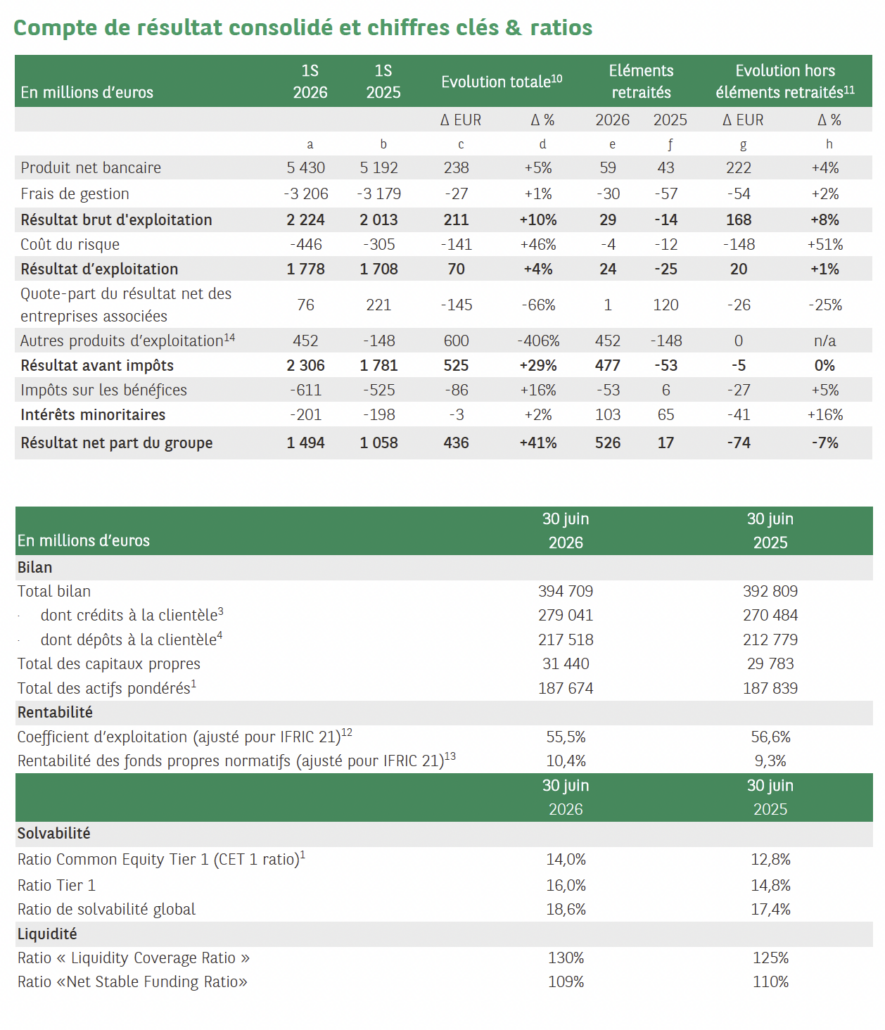
BNP Paribas Fortis reported a net profit of €1.494 billion for the first half of 2026. The result included a €0.6 billion gain from the sale of its stake in AG Insurance, while underlying performance was affected by higher credit risk costs and pressure on Arval’s used-car values.
From an insurance perspective, one of the most significant developments is the evolution of BNP Paribas Fortis’ relationship with AG Insurance. The bank finalised a new distribution agreement with AG Insurance during Q2 2026, combined with a brokerage partnership. BNP Paribas Fortis intends to progressively move away from an exclusive-agent model, giving it greater flexibility to broaden its insurance offering, particularly for Private Banking, Professional, Local Business and MidCap clients.
Insurance activity continued to grow during the first half of the year. The number of retail non-life contracts increased by 2.7% to 1.1 million, while non-life premiums from professional clients rose by 60%. The bank also reported strong commercial momentum in life insurance. Its next priority is the operational implementation of the renewed AG Insurance distribution model, with a focus on growth, simplified processes and increasingly digital customer and employee journeys.
Investment-related insurance products also showed strong growth. Branch 23 life insurance contracts increased by 36% compared with the first half of 2025, reflecting greater customer appetite for investment products alongside savings certificates and investment funds. Life insurance assets within off-balance-sheet products grew by 5.7%.
The broader economic environment remains relevant for insurers and actuaries. BNP Paribas Fortis revised its Belgian inflation forecast to 2.8%, compared with 1.8% previously, and its nowcasting models point to GDP growth slowing to 0.1% in Q3 2026. The bank attributes this mainly to higher oil prices and heightened geopolitical tensions, which have disrupted energy markets, trade flows and industrial supply chains.
On the risk and capital side, BNP Paribas Fortis reported a CET1 ratio of 14.0% and a liquidity coverage ratio of 130%. Cost of risk increased by €148 million, mainly due to higher provisions for doubtful exposures at TEB in Türkiye and within CIB.

AXA reports strong first-half 2026 performance and higher Solvency II ratio
From an insurance perspective, Property & Casualty operating earnings rose by 6% to €3.2 billion, while Life & Health operating earnings increased by 11% to €2.0 billion.
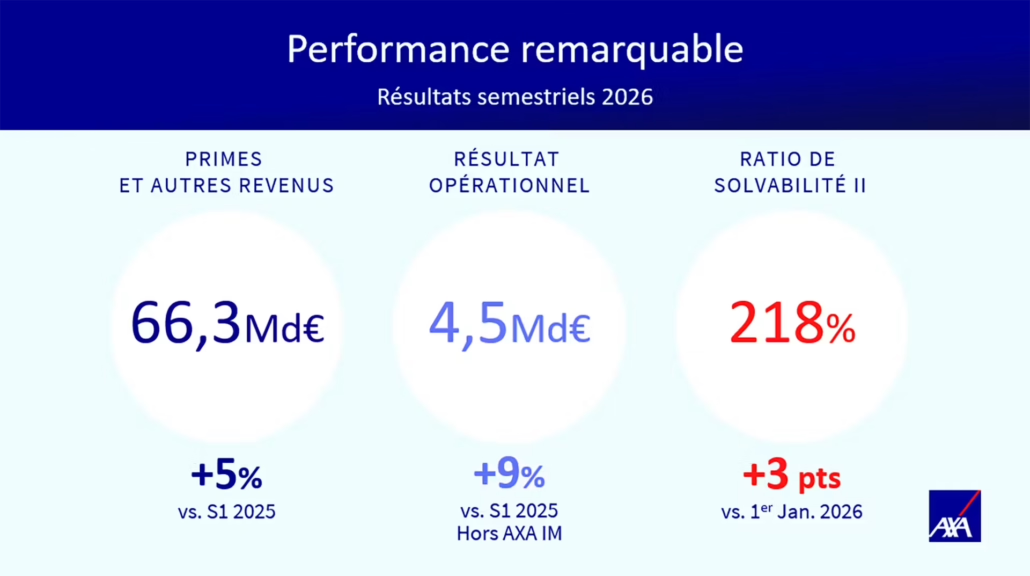
Gross written premiums and other revenues reached €66.3 billion, up 5%. P&C contributed €35.1 billion, up 3%, while Life & Health increased by 8% to €31.2 billion.
AXA’s Solvency II ratio stood at 218% at 30 June 2026, three percentage points higher than at the start of the year, despite the end of the Solvency II grandfathering transition period.
For actuaries, the key points are the solid earnings momentum across both P&C and Life & Health, continued premium growth, and the strengthening of the Group’s solvency position.
AXA expects 2026 operating earnings per share growth to come in at the upper end of the 6% to 8% target range set under its “Unlock the Future” strategic plan.
The Group was also due to present its new 2027–2029 strategic plan in September 2026, which should provide further guidance on capital deployment, growth priorities and business mix.

Athora strengthens capital generation and PRT position after PICG acquisition
Athora reported operating capital generation of €648 million in the first half of 2026, up from €337 million a year earlier, supported by the integration of Pension Insurance Corporation Group (PICG).
New business volumes reached €2.7 billion, including €2.2 billion of organic new business and €0.5 billion of Pension Risk Transfer transactions. By 1 September, Athora Netherlands and PICG had completed a further €5.6 billion of PRT deals, with another €2.1 billion in exclusivity.
Assets under management and administration increased to €141 billion from €76 billion at the end of 2025, largely due to the PICG acquisition. IFRS shareholders’ equity and CSM rose to €13.2 billion.
IFRS profit before tax declined to €55 million from €134 million, as higher insurance service results were partly offset by market movements and increased expenses.
The estimated Group BSCR solvency ratio improved slightly to 197%, while Athora Belgium’s ratio declined to 153% from 162%. Fitch also upgraded Athora’s rating to A+ with a Stable outlook.
Strategically, Athora completed the PICG acquisition, plans to relocate its headquarters to the UK by late 2027, and has agreed to sell Athora Germany to Frankfurter Leben.

Helvetia Baloise reports strong first-half 2026 performance
Helvetia Baloise reported underlying earnings of CHF 631.6 million for the first half of 2026, with an annualised adjusted return on equity of 18.7%.
Underwriting performance remained strong, with a combined ratio of 92%.
The Group also maintained a solid capital position, with an estimated Swiss Solvency Test ratio of around 270% at the end of the first half and an S&P financial strength rating of A+.
Integration following the merger is progressing faster than expected, with nearly 50% of the long-term CHF 650 million synergy and efficiency target already achieved.
Important integration milestones have been reached in Switzerland and Germany, allowing the Group to increase its focus on sustainable and profitable growth.
According to CEO Fabian Rupprecht, Helvetia Baloise is now focused on fully leveraging the potential of the combined Group to deliver long-term value.

NN Group delivers strong first-half 2026 results
In the Netherlands, Non-life gross written premiums increased by 6% and the combined ratio improved to 90.5%, ahead of the Group’s 91–93% guidance range.
The Dutch defined contribution pensions business also performed strongly, with assets under management increasing by 13% to €48.2 billion, supported by €1.7 billion of net inflows.
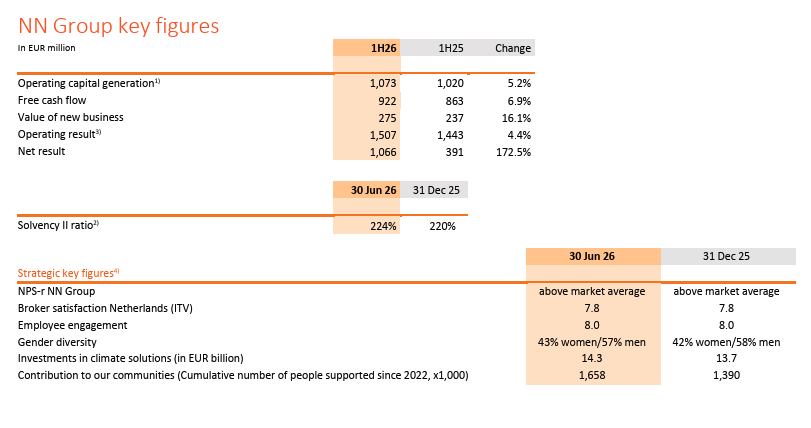
The Group’s operating result increased by 4% to €1.507 billion, while net result rose to €1.066 billion from €391 million in the first half of 2025.
NN Group’s Solvency II ratio increased to 224% from 220% at year-end 2025, supported by operating capital generation and the exclusion of NN Bank from the Group ratio, partly offset by adverse market movements and model and assumption changes. NN Life’s Solvency II ratio declined to 213%.
Free cash flow increased by 7% to €922 million, while the Group announced an interim dividend of €1.55 per share, up 12% year on year.
NN Group remains on track towards its 2028 targets, including €2.2 billion of operating capital generation and more than €1.8 billion of free cash flow.